
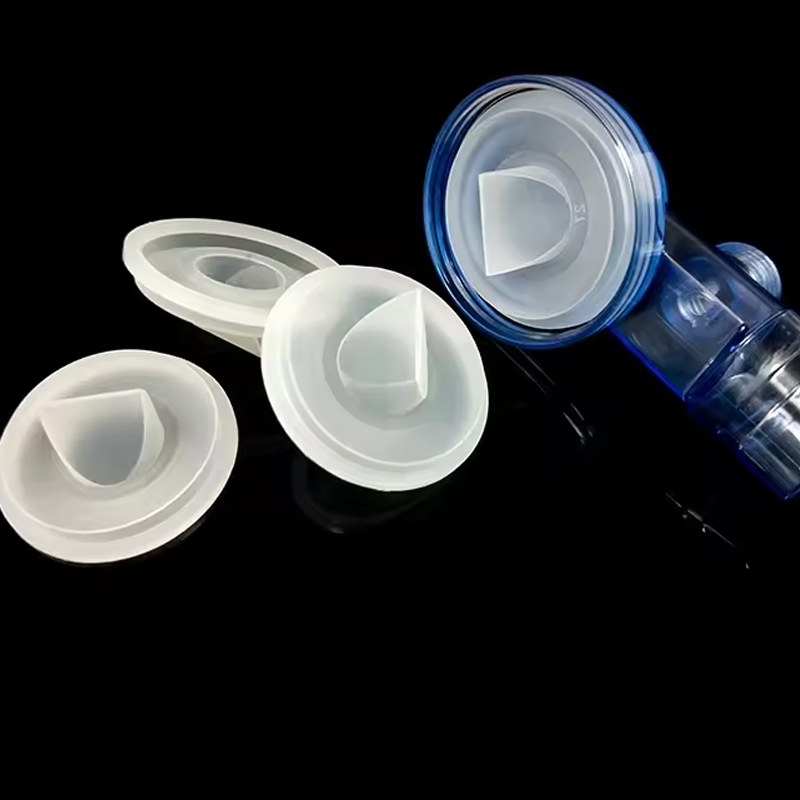
Are you sourcing medical diaphragm valves for a regulated product and want to be certain you pick the right design, supplier, and validation path? At Silfusion, we help procurement teams and design engineers every day to translate clinical and process requirements into production-ready valves. In this guide — written from the perspective of a manufacturer with LSR molding, assembly, and testing capabilities — you’ll find practical, vendor-ready guidance on what a medical diaphragm valve is, what specifications matter, how to evaluate suppliers, and how manufacturing choices (from material selection to ketchup valve injection molding techniques) impact performance, biocompatibility, and long-term cost of ownership.
What is a medical diaphragm valve and why it matters
A medical diaphragm valve is a fluid-control device that uses a flexible membrane (the diaphragm) to open, close, or regulate flow while maintaining a sealed fluid path. Unlike conventional valves that rely on moving metal components, diaphragm valves isolate the process fluid from mechanical parts — a fundamental advantage in sterile, particle-sensitive, or bioactive environments. In medical and bioprocess settings, diaphragm valves protect product integrity, simplify cleaning (CIP/SIP), and reduce cross-contamination risk — all of which are essential for regulatory approval and clinical safety.
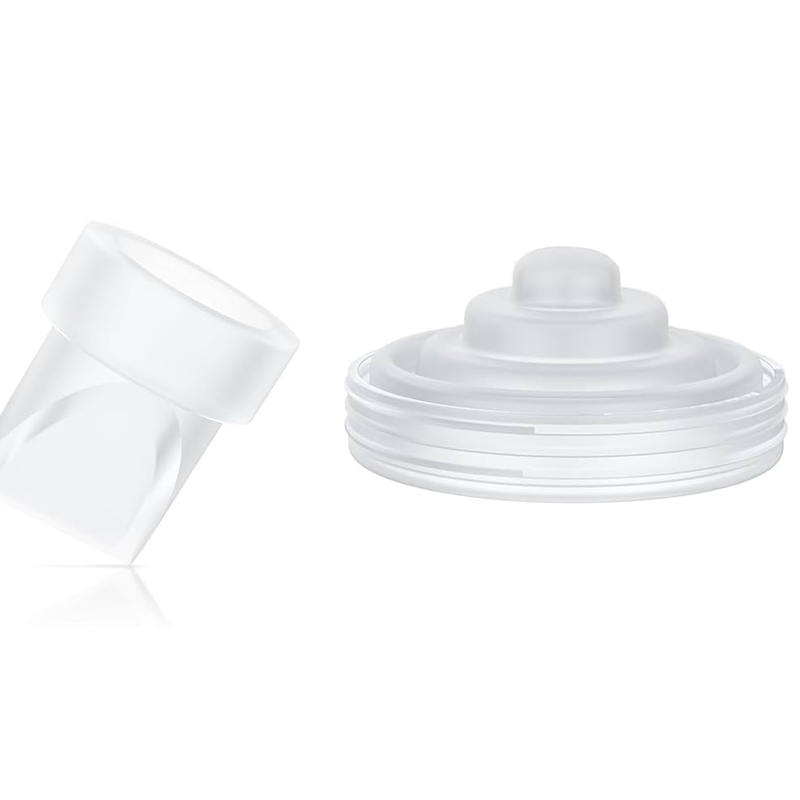
Core features procurement teams must prioritize
Selecting the right valve requires balancing functional performance with regulatory compliance and manufacturability. Below are the non-negotiable attributes:
- Biocompatible materials (FDA, USP Class VI) for any patient-contact or injectable fluid path.
- Leak-proof sealing across expected pressures and temperatures — a true leak proof valve under both static and dynamic conditions.
- Sterilization compatibility (autoclave, gamma, EtO, or SIP as required).
- Traceable material certificates and process documentation from suppliers (lot traceability, CoC).
- Design for cleaning (CIP/SIP flow paths and minimal crevices).
- Repeatable manufacturing (tight process control, validated molding or machining, and batch testing).
- Supplier capabilities for custom requirements — tooling, rapid prototyping, testing, and scaling.
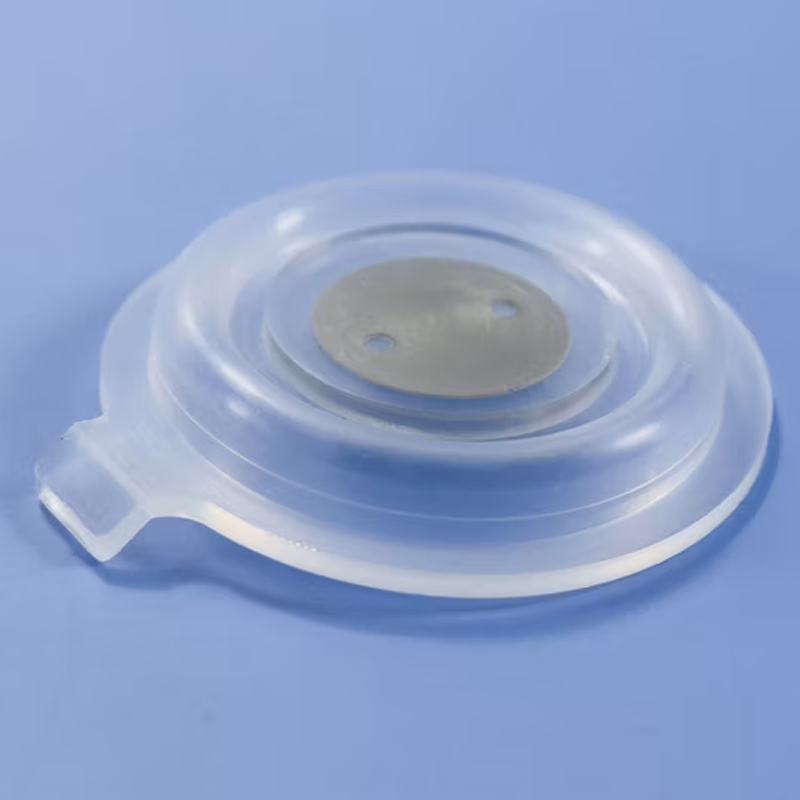
Materials and when to use them
Material choice determines chemical compatibility, sterilization method, flex life, and regulatory burden. The table below summarizes common materials for diaphragms and their tradeoffs.
| Material | Typical Temp Range | Chemical Resistance | Biocompatibility | Typical Uses | Notes |
|---|---|---|---|---|---|
| Medical-grade Silicone (LSR) | -60°C to +230°C | Good (aqueous, many reagents) | High (USP Class VI available) | Respiratory valves, infusion lines, one way silicone valve designs | Excellent flexibility, ideal for one way silicone valve applications and overmolding |
| PTFE (Teflon) | -200°C to +260°C | Excellent (most chemicals) | High (when processed correctly) | Valve seats, diaphragms for aggressive chemistries | Low friction, poor elasticity — often used as liners |
| EPDM | -50°C to +150°C | Excellent (water, steam) | Moderate | Steam or hot-water systems | Good for SIP, limited chemical compatibility vs FKM |
| FKM (Viton®) | -20°C to +200°C | Excellent (solvents, fuels) | Moderate–High | Aggressive chemical service | Use where chemical resistance > silicone is required |
Valve types and common medical uses
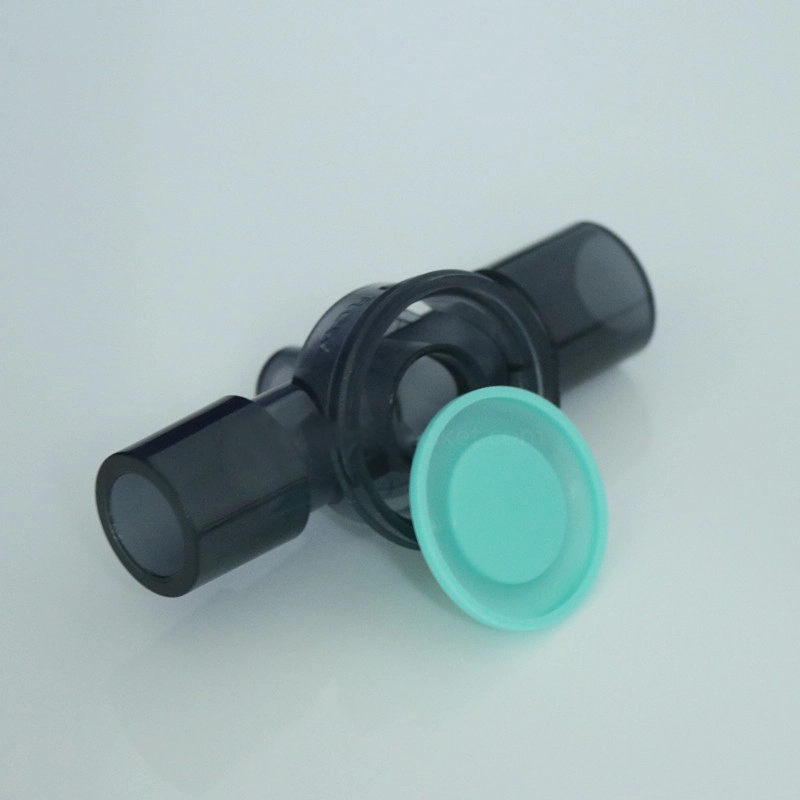
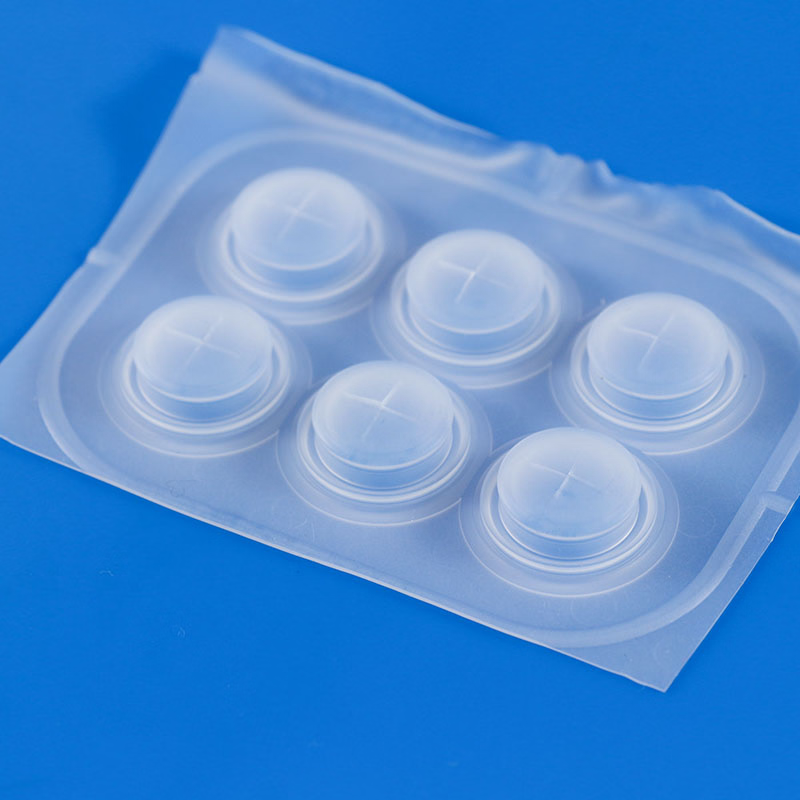
Medical diaphragm valves can be implemented in several architectures: pinch valves (external compression of tubing), elastomeric dome/seat valves (internal diaphragm actuates against a seat), and integrated one-way designs (duckbill/umbrella) that act as passive check valves. The one way silicone valve family (duckbill, umbrella) is especially common where low cracking pressure, low dead volume, and low contamination risk are required.
| Valve Form | Strengths | Typical Medical Uses |
|---|---|---|
| Diaphragm (actuated) | Tight shut-off, good for automated dosing | Bioreactors, fluid sampling, process skid control |
| Pinch valve | No wetted metal, quick retrofit | Tubing-based disposable kits, blood lines |
| Duckbill / Umbrella (one-way) | Passive, low cracking pressure, low dead volume | Infusion sets, respiratory circuits, ketchup valve injection molding analogs in food-grade dispensers |
| Lined diaphragm (PTFE/silicone) | Chemical resistance + sealing | Aggressive reagent handling |
Standards and regulatory expectations
Medical valve procurement isn’t just performance testing — it’s traceability and documentation. Key standards to request and verify:
- ISO 13485 — quality management system for medical device manufacturers.
- USP Class VI and ISO 10993 — biocompatibility (cytotoxicity, sensitization, irritation).
- FDA 21 CFR material acceptability for drug contact.
- ASME BPE — for bioprocessing valves and hygienic design (when applicable).
- RoHS / REACH declarations depending on regional requirements.
Ask suppliers for material CoAs, sterilization validation protocols, and test certificates. As a manufacturer, Silfusion maintains these documents for every production lot and includes them in our custom service packages.
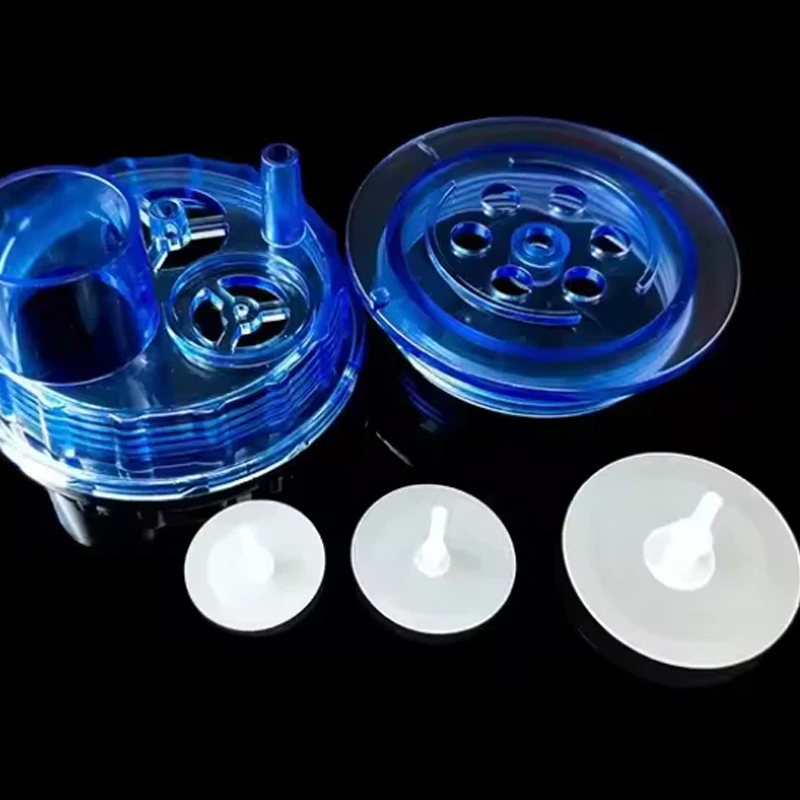
Testing and validation you should require
A supplier’s test matrix should include both functional and material validation:
- Cracking/opening pressure and leakage across temperature ranges.
- Burst and pressure-hold tests to defined safety margins.
- Cycle life testing (number of actuations under realistic conditions).
- Chemical soak and extractables/leachables for sensitive drug-contact applications.
- Sterilization compatibility: autoclave, gamma, EtO, or SIP cycles per user needs.
- Particulate and endotoxin controls for parenteral applications.
Silfusion provides test reports and can support third-party lab analysis where required by your regulators or contract manufacturing partners.
Manufacturing notes — why process matters
Material is only half the story. Manufacturing method affects tolerance, microstructure, and long-term behavior:
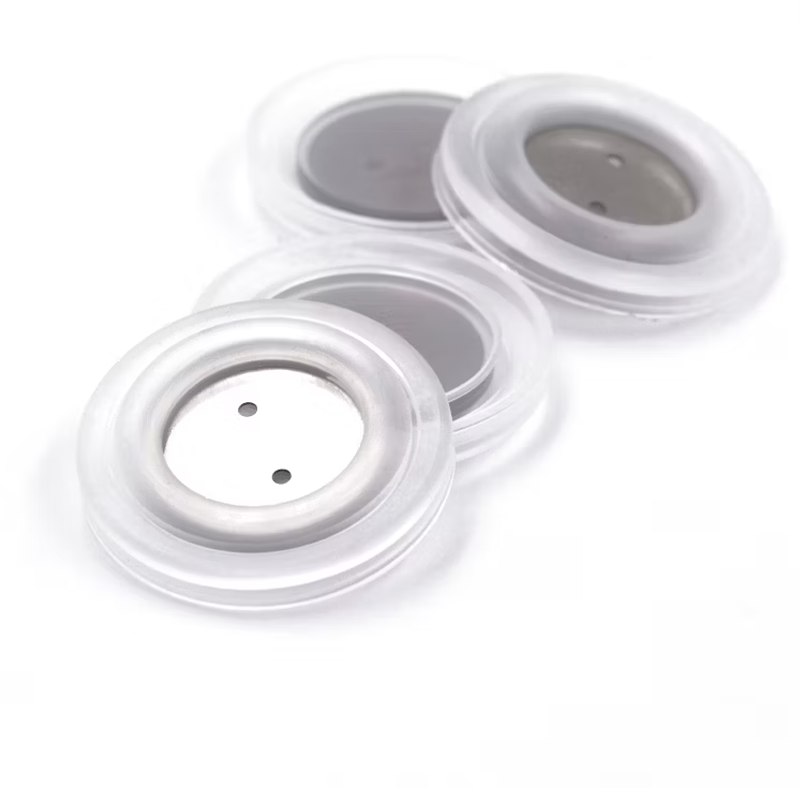
- LSR injection molding gives consistent part geometry, tight tolerances, and medical-grade purity — ideal for high-volume diaphragm components and ketchup valve injection molding analogies in food-grade parts.
- Compression or transfer molding can be used for low-volume or thick-section diaphragms but may introduce greater dimensional spread.
- Overmolding (silicone onto rigid plastics or metal inserts) reduces assembly steps and leak risk. Silfusion routinely integrates overmolding into our one-stop manufacturing workflows.
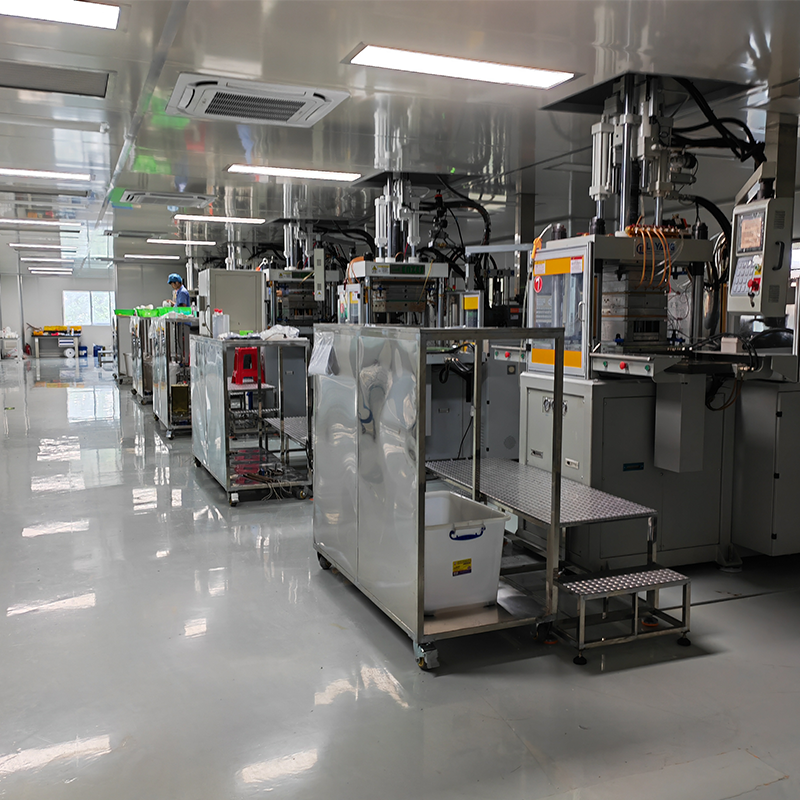
- Cleanroom assembly and finished-goods packaging are available for sterile or low-particulate device families.
Supplier selection and procurement checklist
When qualifying suppliers, insist on documented capabilities across these categories:
- Regulatory certifications (ISO 13485, material CoAs, biocompatibility reports).
- Manufacturing processes (LSR molding, overmolding, cleanroom assembly).
- Validation & testing (cycle life, pressure testing, sterilization).
- Supply chain transparency (traceability for elastomer batches and additives).
- Custom service offerings (DFM support, prototype tooling, small-volume bridge tooling).
- Scalability and capacity to ramp from pilot to production.
- Logistics & packaging for sterile distribution.
Silfusion acts as both manufacturer and technical partner — we provide DFM feedback early, run RAPID proto tooling, validate processes, and scale production while maintaining supplier coordination for ancillary materials (e.g., rigid housings, fasteners).
Total cost of ownership (TCO) considerations
Beyond unit price, include hidden costs in procurement decisions:
- Rework and scrap rates tied to poor molding.
- Validation and regulatory costs if materials lack documentation.
- Downtime and warranty exposure from premature part failure.
- Inventory and obsolescence risk — address via supplier-managed inventory (Kanban) or MOQ-sensitive tooling strategies.
Silfusion’s custom service packages are designed to minimize TCO: we optimize tooling for yield, supply validated documentation, and offer controlled scale-up plans to de-risk production launches.
Practical procurement roadmap
- Define functional and regulatory requirements (pressure, fluid, sterilization method).
- Request RFQ with material CoA and required tests.
- Perform DFM and design-for-manufacture review with chosen suppliers.
- Approve prototype tooling and run validation tests.
- Run a pilot production lot with full documentation.
- Move to validated production with agreed inspection plans and OTD metrics.
Conclusion
If your program calls for reliable, validated medical diaphragm valves — whether actuated diaphragms or passive one way silicone valve designs — the right supplier matters. At Silfusion, we combine medical-grade LSR molding, validated testing laboratories, and end-to-end manufacturing (tooling → molding → overmolding → cleanroom assembly) so you can entrust us with both product performance and regulatory deliverables. Our custom service includes DFM, prototyping, qualification runs, and supplier coordination to ensure a low-risk path from RFQ to production.
Contact Silfusion for a technical review of your valve requirements, a quotation for prototype tooling, or to evaluate supplier alternatives — we’ll help you define the right specification, produce a validated sample, and scale reliably to production volumes while keeping TCO and compliance top of mind.


 English